
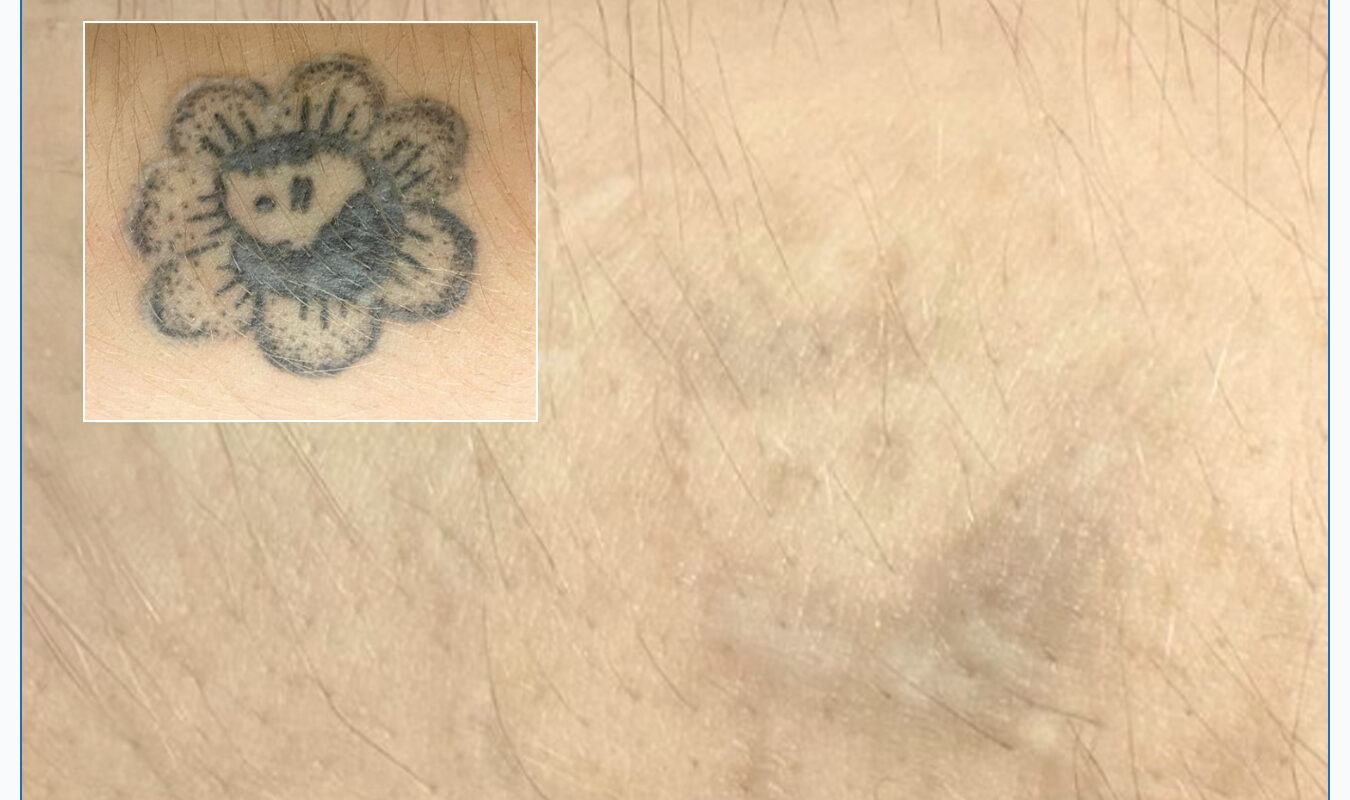
If you’re considering laser tattoo removal, one fear comes up more than almost any other: “Will I be left with a scar instead of a tattoo?” It’s a fair question — and the honest answer isn’t a flat “no.” It’s “very rarely, and almost always preventable.”
At Clarity Tattoo Removal in Somerville and Framingham, we’ve performed thousands of treatments with the PicoWay® picosecond laser, and significant scarring is genuinely uncommon when the right laser, settings, and aftercare are used. Here’s what actually causes scarring during tattoo removal, what your real risk looks like, and exactly how to avoid it.
Quick Answer: Does Laser Tattoo Removal Cause Scars?
No — laser tattoo removal does not cause scarring in the vast majority of patients when performed with modern picosecond technology, appropriate settings for your skin type, and proper aftercare. Industry research and clinical experience put the risk of scarring at roughly less than 5%, and most of those cases trace back to outdated lasers, overly aggressive treatment, or aftercare missteps like picking at scabs.
The more important truth most clinics won’t tell you: a lot of “scarring” people blame on laser removal was actually there before treatment — caused by the original tattoo itself.
What Kinds of Scarring Are We Actually Talking About?
“Scar” is a broad word. When patients ask about scarring from tattoo removal, they usually mean one of four different skin changes:
1. Hypertrophic or keloid scars (raised scars)
These are thick, raised areas of collagen. They’re rare with modern laser tattoo removal but more likely in people with a personal or family history of keloids, or on high-tension body areas like the chest, shoulders, and upper back.
2. Textural changes
Mild differences in skin smoothness — slightly shiny, slightly rougher, or faintly indented skin. Usually subtle and often fades over months. This is the most common form of “scarring” people notice, and it’s typically minor.
3. Hypopigmentation (lighter patches)
The treated skin appears lighter than the surrounding area because the laser temporarily affected the melanocytes that produce pigment. Usually temporary, but it can be more stubborn on darker skin tones if settings aren’t calibrated correctly.
4. Hyperpigmentation (darker patches)
The opposite issue — the skin produces extra melanin in response to the laser. Almost always temporary, and almost always preventable with sun protection.
True raised or pitted scars are the rarest of these. Pigment changes are far more common and almost always resolve over time.
What Actually Causes Scarring During Tattoo Removal?
Scarring during laser removal isn’t random — it has identifiable causes. The big ones:
- Outdated laser technology. Older Q-switched lasers deliver energy in nanoseconds — long enough that more of that energy converts to heat, which can damage surrounding skin. Picosecond lasers like PicoWay® deliver pulses a thousand times shorter, shattering ink with pressure rather than heat. Read more on PicoWay vs Q-switched and PicoSure lasers.
- Settings that are too aggressive. A skilled technician adjusts fluence (energy) and spot size to your skin type, tattoo depth, and ink color. Pushing settings too hard to fade a tattoo faster is one of the most common causes of skin damage.
- Sessions spaced too closely. Your skin needs at least 6–8 weeks (often longer) between sessions to fully heal and clear ink. Rushing the schedule stacks trauma on healing skin.
- Inappropriate treatment for your skin type. Patients with Fitzpatrick IV–VI skin need specific wavelengths and lower fluences to avoid pigment changes. Here’s our full guide to the Fitzpatrick scale and laser safety.
- Picking, scratching, or scrubbing scabs. This is the #1 patient-side cause of scarring. Scabs and blisters are part of healing — pulling them off interrupts that process and almost guarantees a mark.
- Skipping sun protection. UV exposure on healing skin causes hyperpigmentation and slows recovery, which can lock in textural changes.
Notice how many of these are controllable. That’s why scarring rates at experienced clinics using modern equipment are so low.
Why PicoWay® Reduces Scarring Risk
The single biggest factor in whether tattoo removal scars is the type of laser being used. Here’s why picosecond technology changed the safety profile of tattoo removal:
- Shorter pulse duration. PicoWay’s picosecond pulses generate a photoacoustic (pressure) effect that fractures ink particles, rather than the photothermal (heat) effect of older nanosecond lasers. Less heat = less collateral damage to surrounding skin.
- Smaller ink fragments. The smaller the broken-down ink particles, the easier it is for your immune system to flush them out — meaning fewer sessions and less cumulative trauma to the skin.
- Safer for all skin types. PicoWay’s wavelength options (1064 nm, 785 nm, 532 nm) allow us to match the laser to your skin tone and ink color, which dramatically lowers the risk of pigment changes on darker skin.
That’s not marketing — it’s the reason picosecond lasers are now considered the gold standard. If a clinic is still using only Q-switched or older PicoSure-only equipment, ask why.
Who’s at Higher Risk of Scarring?
Even with the right laser, some patients carry slightly elevated risk and need a more careful treatment plan. These factors don’t mean you can’t get tattoo removal — they mean your provider needs to dial things in more conservatively.
- History of keloid or hypertrophic scars from past injuries, surgeries, or piercings.
- Darker skin tones (Fitzpatrick IV–VI) — higher risk of pigment changes if treated with the wrong wavelength or fluence.
- Tattoos on high-tension areas like the sternum, shoulders, upper back, and joints, which heal under more mechanical stress.
- Pre-existing scarring from the original tattoo — heavy-handed tattooing, blowouts, or infections during the original tattoo session can leave scar tissue underneath that becomes more visible as the ink fades. More on blowouts and tattoo mistakes here.
- Certain medications and conditions — Accutane in the past 6–12 months, active autoimmune skin conditions, or anything affecting wound healing.
A good consultation will catch all of these and adjust your treatment plan accordingly.
“Scarring” That Was Already There: A Truth About Old Tattoos
This is one of the most under-discussed parts of tattoo removal. Many tattoos — especially older ones, amateur ones, or stick-and-pokes — already have scar tissue underneath them. The pigment masks it. As the ink fades through laser sessions, that pre-existing scar tissue becomes visible.
Patients sometimes assume the laser caused the scar. In reality, the laser revealed what the tattoo machine left behind years earlier. A trained provider can usually identify this on consultation by looking at the tattoo’s edges, line weight, and any subtle raised texture before treatment ever begins.
How to Avoid Scarring From Laser Tattoo Removal
Most of the variables that affect your scarring risk are within your control. Here’s how to keep your odds as close to zero as possible.
Choose the right provider
This matters more than anything else. Look for:
- A picosecond laser (PicoWay®, Enlighten, PicoSure) — not just Q-switched.
- Providers trained specifically in laser tattoo removal, not just adding it as a side service.
- A real consultation that asks about your medical history, medications, and skin type.
- Conservative session spacing — generally 6–8 weeks minimum, longer for darker skin or larger tattoos.
Follow aftercare to the letter
Healing well is half of getting a clean result. The basics:
- Keep the area clean and dry for the first 24 hours.
- Apply a thin layer of healing ointment as directed.
- Do not pick, scratch, or pop blisters or scabs. Let them fall off on their own.
- Avoid hot tubs, pools, and ocean water until fully healed.
- Wear SPF 30+ on the treated area every day once healed — for the entire treatment course.
- Skip workouts that cause heavy sweating or friction over the treated area for 24-48 hours.
Our full tattoo removal aftercare guide walks through every stage of healing.
Don’t rush the timeline
Coming in too soon for your next session is one of the easiest ways to stack damage on healing skin. Tattoo removal is a marathon — usually 6 to 12 sessions over 12–24 months. Trying to compress that timeline is a false economy.
Tell your provider everything
Recent sun exposure, new medications, recent skincare treatments, supplements, or any unusual healing from your last session — your provider needs all of it to set safe parameters.
What If You Already Have Scarring From a Previous Removal?
If you’ve had laser removal elsewhere and ended up with raised tissue, textural changes, or pigment shifts, you have options. We frequently consult with patients who had treatments at other clinics that left them concerned about scarring. Depending on the situation, the path forward may include:
- Switching to PicoWay® with conservative settings to continue removal without worsening the scar.
- Pausing treatment to let the skin fully recover before resuming.
- Referral to a dermatologist for scar-specific treatments (silicone sheets, steroid injections, microneedling, or fractional laser).
Don’t assume scarring from a previous clinic means you can’t continue — it just means your plan needs to be re-thought.
FAQ: Laser Tattoo Removal and Scarring
Is scarring from tattoo removal permanent?
Most “scarring” people notice after tattoo removal is actually temporary pigment change or mild textural difference, and resolves over weeks to months. True raised or pitted scars are rare and, if they occur, can usually be improved with dermatological treatments.
Does PicoWay leave scars?
PicoWay’s picosecond pulses are specifically designed to minimize heat damage to the skin, which is the primary cause of scarring with older lasers. Scarring with PicoWay in trained hands is uncommon — typically under 5% — and most cases trace back to aftercare issues rather than the laser itself.
Will my old tattoo scar show after removal?
Possibly. If the original tattoo was done with a heavy hand, caused a blowout, or got infected during healing, scar tissue may have formed underneath the ink. That scar will become visible as the pigment fades. A consultation can usually identify this risk before you start treatment.
Can dark skin get tattoo removal without scarring?
Yes — but the choice of laser and wavelength matters more than for lighter skin. PicoWay’s 1064 nm wavelength is generally safest for Fitzpatrick IV–VI skin types because it bypasses the melanin in the upper layers of the skin. Settings should be conservative, and sessions spaced further apart. More on safe treatment by skin type.
What does a tattoo removal scar look like?
Most often it’s a subtle change in skin texture — slightly shiny, faintly raised, or slightly indented — within the boundary of the original tattoo. Significant raised scars or color changes are uncommon.
How can I tell if I’m scarring or just healing?
Redness, mild swelling, scabbing, and occasional small blisters are normal healing for 1–2 weeks after a session. If you notice persistent raised tissue, deep indentation, or a change in skin texture lasting more than 3 months after a session, contact your provider for an evaluation.
Will sweating or working out cause scarring?
Not directly, but heavy sweating and friction over freshly treated skin can disrupt the healing scab layer and increase infection risk — both of which raise scar risk. Skip intense workouts for 48–72 hours after each session.
The Bottom Line
Laser tattoo removal does not typically leave scars when performed with the right laser, the right settings, and the right aftercare. The most controllable factors are your choice of provider and your discipline with healing. Pick a clinic using modern picosecond technology, follow aftercare carefully, give your skin time between sessions, and your odds of scarring stay very low.
If you’re considering tattoo removal and want an honest assessment of your specific tattoo, skin type, and any pre-existing scar tissue, we’d love to take a look.
Ready to Start Tattoo Removal Without the Scar Worry?
Clarity Tattoo Removal uses the PicoWay® picosecond laser at both our Somerville (Boston) and Framingham locations. Free consultations, transparent pricing, and care plans tailored to your skin type.
✅ Book a Free Consultation | 📸 Get an Online Quote | 📞 Call or Text (877) 667-4738