
Laser Tattoo Removal Guide
Finger, Hand & Knuckle Tattoo Removal: Why These Take Longer
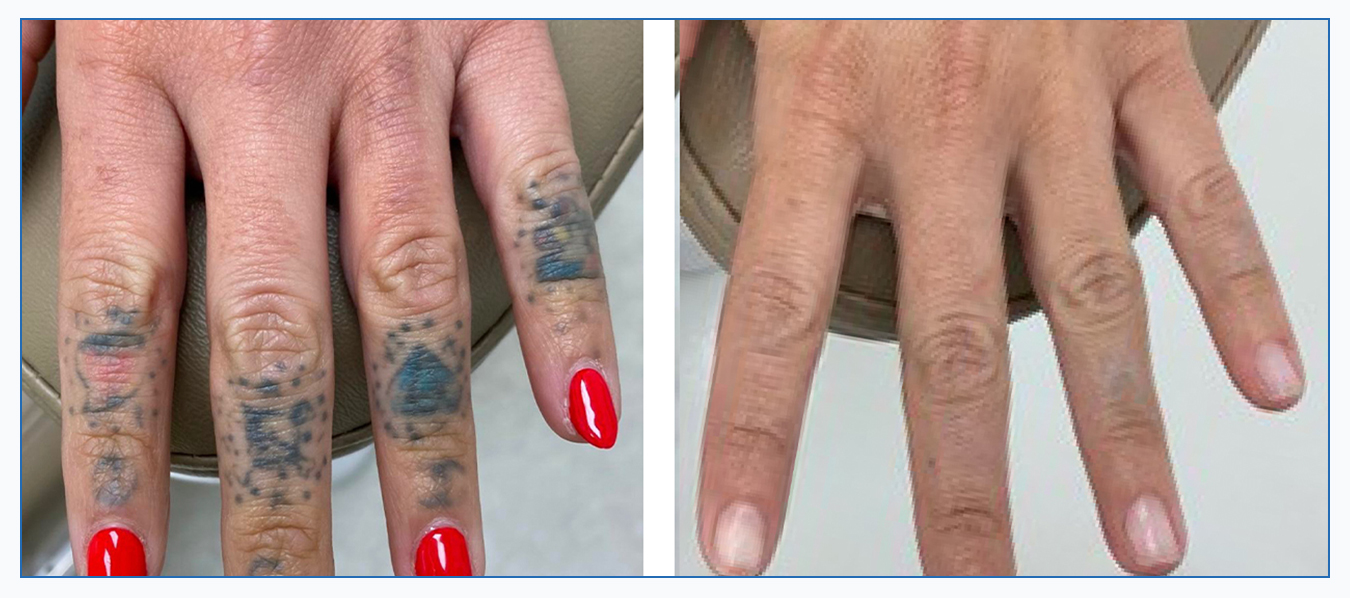
Hand and finger tattoos are among the most requested removals — and the most misunderstood. If you’ve been told “it’ll take more sessions,” here’s exactly why that’s true, what to realistically expect, and how to get the best possible results.
Quick Answer
Finger, hand, and knuckle tattoos take significantly longer to remove — often 50–100% more sessions than a comparable tattoo elsewhere on the body. The reason is biology: your hands sit at the end of your circulatory system, meaning blood flow is lower, ink clearance is slower, and healing takes more time. With the right laser and provider, significant clearing and full removal are still achievable for most people.

Why Hand and Finger Tattoos Take Longer to Remove
Tattoo removal isn’t just about the laser — it’s about your body doing the heavy lifting. After each session, your immune system sends cells to engulf the shattered ink particles and carry them away through your lymphatic system. That process depends entirely on blood flow.
Your hands and fingers sit at the very end of your circulatory system. Blood pressure is lower there, immune cells arrive more slowly, and the biological machinery that clears ink after a laser session works at a fraction of the speed it does on your upper arm, back, or torso.
The result: more sessions, longer spacing between them, and results that require more patience — but are still very achievable with the right approach.
5 Reasons Finger & Knuckle Tattoos Are Uniquely Stubborn
1. Poor Circulation Means Slow Ink Clearance
After each laser session, macrophages — immune cells — engulf the shattered ink particles and carry them away. In areas with robust blood flow, this happens efficiently. In your fingers and hands, circulation is weaker and more variable. Ink clearance slows dramatically.
Practical impact: A back tattoo that clears in 6–8 sessions might take 10–14 sessions on the hand or fingers — not because the laser isn’t working, but because your body needs more time to do its job.
2. Thin Skin Directly Over Bone and Tendon
Knuckle tattoos sit directly over bony prominences with almost no subcutaneous fat cushioning. This creates two problems:
More Discomfort
There’s no tissue to absorb heat — energy goes straight to bone and nerve endings. Most clients rate knuckle removal as more uncomfortable than other areas.
Higher Side-Effect Risk
Blistering, hypopigmentation (light spots), and texture changes are more common when skin is thin and underlying structures are close to the surface.
3. Constant Movement Disrupts Healing
Your hands never stop moving. Unlike a tattoo on your ribcage that stays relatively still during healing, finger and hand tattoos are subjected to constant flexion, friction, and environmental exposure throughout recovery.
This can disrupt the healing process between sessions, increase the chance of uneven fading, and — if aftercare isn’t meticulous — raise the risk of complications. Keeping hands clean, dry, and protected after sessions is especially important here.
4. Ink Is Often Deposited at Inconsistent Depths
Fingers and knuckles are notoriously difficult to tattoo cleanly. Skin flexes constantly during the tattooing process, meaning artists often go deeper than intended to compensate for ink migration. The result is ink deposited at inconsistent depths — some shallow, some deep — which means the laser has to work harder to reach all of it.
Patchy fading is a common complaint with finger tattoo removal, and this is exactly why. A good provider will adjust settings across sessions to address different ink depths as they become apparent.
5. Ink Migration Makes the Problem Bigger
If your finger tattoo already looks blurry or “blown out,” this is extremely common. Ink in fingers migrates sideways through the dermis, spreading into tissue beyond the original design. Laser can remove migrated ink, but the diffuse spread means a larger treatment area and more sessions.
Good news: Migrated ink is often shallower than originally deposited ink, which means it can sometimes clear faster in later sessions once deeper layers are addressed.
How Many Sessions Does Finger Tattoo Removal Take?
There’s no universal answer, but here’s a realistic framework based on tattoo type:
| Tattoo Type | Estimated Sessions |
|---|---|
| Small single-color finger tattoo (fresh) | 8-12 |
| Small single-color finger tattoo (older, faded) | 6-10 |
| Black ink knuckle tattoo | 8-12 |
| Multi-color hand tattoo | 10-15+ |
| Full hand / sleeve onto hand | 12-15+ |
These ranges assume professional-grade picosecond laser equipment, proper session spacing, and consistent aftercare. Individual results vary based on ink depth, skin type, and how well your body clears ink between sessions.
What Type of Laser Works Best for Hand & Finger Tattoos?
For hand and finger tattoos, picosecond lasers are the current gold standard. Here’s why they matter more in this specific location:
Smaller Ink Particles
Picosecond pulses shatter ink into finer fragments, reducing the burden on your already-sluggish lymphatic system in the hand.
Less Heat Per Pulse
Less thermal damage to the thin skin over knuckles, meaning lower risk of side effects in this sensitive area.
Better on Stubborn Ink
Measurably better results on resistant ink — which finger tattoos often become after the first few sessions.
At Clarity, we use the PicoWay® — a gold-standard picosecond laser with multiple wavelengths to address different ink colors effectively:
- 1064nm — Black and dark blue ink (the most common for finger tattoos)
- 532nm — Red, orange, and yellow inks
- 730nm — Green and teal inks
How to Maximize Your Results
Before Each Session
- Stay well hydrated. Better hydration = better lymphatic function = faster ink clearance. Increase water intake 48 hours before your appointment.
- Avoid sun exposure on your hands for at least 4 weeks prior. Tanned skin raises the risk of pigment complications.
- Don’t use numbing cream without checking first. Some topical anesthetics cause vasoconstriction — the last thing you want in an already under-perfused area.
After Each Session
- Keep the area clean, dry, and out of direct sunlight.
- Avoid submerging your hands (dishes, swimming) for at least 72 hours.
- Moisturize gently with a fragrance-free ointment (Aquaphor or plain petroleum jelly).
- Don’t pick at blistering. Blisters are normal — disrupting them increases scarring risk significantly.
- Wear SPF 50+ on treated areas between sessions.
Session Spacing
Most providers recommend 8-10 weeks between sessions for hand and finger tattoos — on the longer end compared to other body parts. This isn’t upselling; your hands genuinely need more time to clear ink and heal. Pushing sessions too close together stacks trauma on already-stressed tissue and produces diminishing returns.
Will It Fully Remove?
For most black ink finger and knuckle tattoos: yes. Significant clearing — and often complete removal — is achievable, particularly with:
- Black or dark blue ink
- Professionally applied tattoos with consistent depth
- Lighter skin tones (though modern lasers work effectively across skin tones with the right wavelength selection)
Where results are less predictable:
- Heavy black fill across the full finger
- Older tattoos with significant ink migration
- Multi-color work with greens, blues, or white ink
- Skin tones prone to hyperpigmentation — not because removal doesn’t work, but because pigment changes require careful laser settings and an experienced provider
Ready to Start? Get a Free Consultation.
At Clarity Tattoo Removal, we specialize in complex and stubborn cases — including finger, hand, and knuckle tattoos. During your free consultation, we’ll assess your specific ink, skin type, and realistic session count, and give you an honest picture of what to expect. Serving Boston, Framingham, and surrounding areas.
Call or text: (617) 800-9400 • Goodbye to Regret. Hello to Clarity.
Frequently Asked Questions
Does finger tattoo removal hurt more than other areas?
Yes, for most people. The lack of padding over bone and the density of nerve endings in the hands makes this one of the more uncomfortable removal sites. That said, sessions are short — typically under 5 minutes for a finger — and topical numbing is available at our clinic.
Will my skin look normal after finger tattoo removal?
In the majority of cases, yes. Some clients notice temporary hypopigmentation (lighter patches) that usually resolves within 6–12 months. Permanent textural changes are possible but uncommon when treatment is performed correctly with appropriate settings for your skin type.
Can I just get a cover-up tattoo instead?
Possibly — but it’s complicated. Finger tattoos are notoriously poor at holding new ink long-term. A few sessions of laser to lighten (not fully remove) the original can dramatically expand your cover-up options and improve how well a new design sits on the skin.
My finger tattoo is already faded and blurry — does that help?
Both. Existing fading means some ink has already broken down naturally, which is helpful. But blurring often means ink has spread laterally, making the treatment area larger and results potentially uneven. Your provider should assess this in person before estimating session count.
How do I choose the right provider for hand tattoo removal?
Look for a provider with specific experience in hand and finger tattoos (ask to see before/after photos of this area specifically), access to picosecond laser technology, and a provider who won’t promise a set number of sessions — because anyone who does isn’t being honest about how variable this area is. A good consultation should include skin type assessment, ink color analysis, and a realistic discussion of your specific case.