
Tattoo Removal Before Your Wedding
The realistic timeline for clear (or significantly faded) skin by the time you walk down the aisle, and what to do if your date is already close.
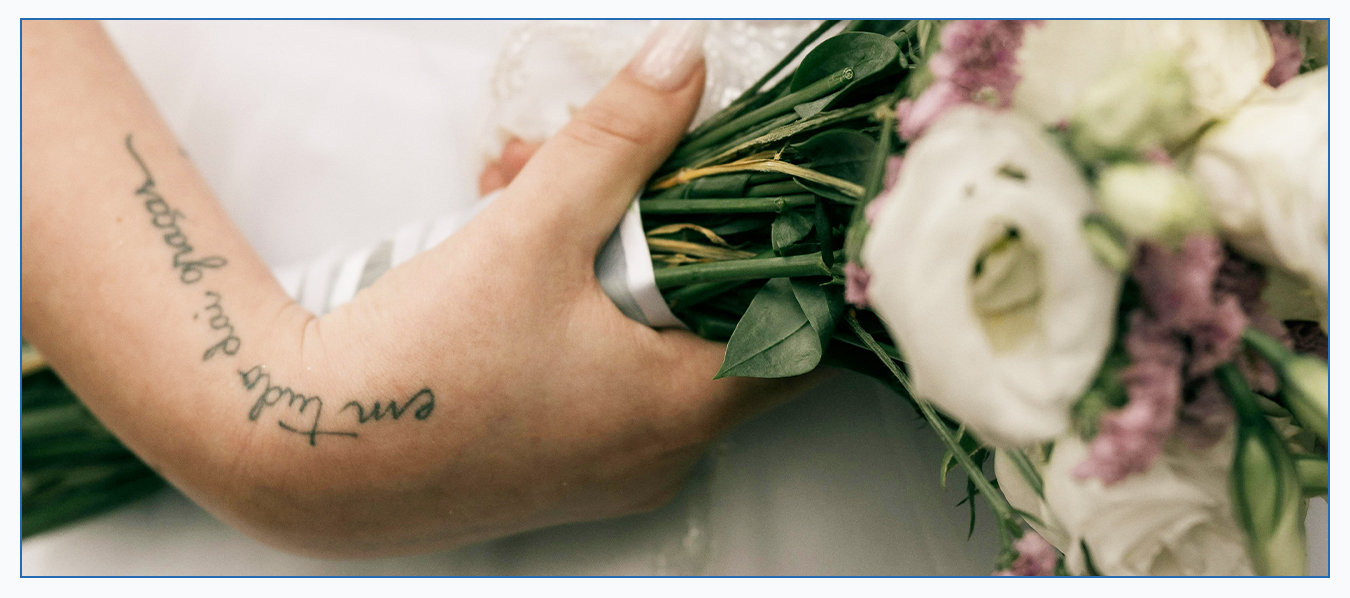
You finally tried on the dress. Or the suit. And there it is, peeking out exactly where you do not want it in your wedding photos: that tattoo you got at 19 and stopped loving at 23.
The good news is that laser tattoo removal works. The honest news is that it takes longer than most people expect, and your wedding date is closer than it feels. If you want clear skin (or even significantly faded ink) by the time you walk down the aisle, the time to start is sooner than your florist booking and right alongside your venue.
Here is the realistic timeline, broken down by how much time you have, what affects the outcome, and what to do if your big day is already on the calendar.
For most tattoos, plan on 12 to 18 months of removal before the wedding. That is not because the laser takes that long to work. It is because your skin needs time to heal between treatments. Standard spacing is six to eight weeks between sessions, and most tattoos take six to ten sessions to fully remove. Do the math and you get a year or more.
If full removal is not realistic in your timeframe, significant fading is. Most clients see 50 to 75 percent fading within four to six sessions, which is often enough to be hidden by a sleeve, foundation, or a smart angle from the photographer.
Why Timing Matters More Than You Think
The biggest mistake people make is starting too late and pushing sessions too close together. Lasering skin that has not finished healing from the previous session is not just less effective. It raises the risk of scarring, blistering, and hyperpigmentation. Those are exactly the things you do not want showing up in wedding photos.
The other reason to start early is the healing window after your final session. You want at least four to six weeks between your last treatment and the wedding so any redness, scabbing, or temporary lightening of the surrounding skin is fully resolved. For an outdoor wedding or anywhere photos will be close up (think hands, neck, collarbone, back), build in even more cushion.
Your Timeline, Based on What You Have Left
Out
The Ideal Timeline
You are in great shape for full removal of most tattoos. Here is how it typically plays out.
Months 1–12: Six to eight treatment sessions, spaced six to eight weeks apart. Each session breaks the ink particles into smaller fragments that your body’s immune system carries away over the following weeks. You will see noticeable fading after every session.
Months 12–16: One to three final sessions to clear stubborn shading, outlines, and any residual color. Some inks (greens, light blues, yellows) are tougher and need extra passes.
Months 16–18: Healing window. No treatments. Your skin returns fully to baseline and any final pinkness resolves before the dress fitting.
Months Out
Still Real Progress
Realistic expectations are four to six sessions, with the goal of major fading rather than guaranteed full clearance. For a small, single color tattoo, full removal may still be on the table. For a larger or more colorful piece, plan on a hidden or barely visible result that combines fading with makeup or wardrobe.
Some clients in this window choose accelerated protocols using newer techniques such as same day multi pass treatments with specific cooling and recovery, but this is a conversation to have with a removal specialist looking at your tattoo, not a one size recommendation.
Months Out
Rescue Mode, Still Worth Doing
Two to four sessions in this window can take a dark, visible tattoo and fade it enough that a thin layer of body makeup will cover it cleanly for the day. We do this regularly for brides and grooms who came in late. The honest conversation is about expectations. You will not have flawless bare skin, but you will have something that disappears in photos.
Months
Cover, Don’t Treat
Do not laser within four to six weeks of the wedding. The risk of visible irritation on the day outweighs any fading benefit. A better plan is to schedule one session now if there is time for full healing, then rely on cover up makeup such as Dermablend or Kat Von D Lock It for the wedding itself. Start your removal series after the honeymoon for the next time you wear that dress at an anniversary.
What Affects Your Timeline
Every tattoo is different. The factors that move your removal timeline up or down include:
Ink color
Black ink responds fastest. Reds and oranges respond well. Greens, light blues, yellows, and white ink are the most stubborn and add sessions.
Age of the tattoo
Older tattoos (five plus years) usually fade faster because the ink has already started breaking down on its own.
Location on the body
Tattoos closer to the heart (chest, upper back, neck) clear faster due to better circulation. Hands, feet, and ankles take the longest.
Ink density and layering
A single pass amateur tattoo clears faster than a professional piece with layered, saturated ink. Cover ups (a tattoo on top of an older tattoo) are the slowest of all.
Skin type
Lighter skin tones generally tolerate more aggressive settings. Darker skin tones require more conservative parameters and slightly more sessions, but results are equally good with the right approach.
Immune system and lifestyle
Smoking slows results significantly. Hydration, exercise, and a healthy immune system speed them up.
A Note for Brides: Eyebrow PMU and Microblading Removal
Body tattoos are not the only ink that brides worry about. Microbladed and powder brow PMU is increasingly on the pre wedding removal list, especially when the original work has faded to a strange color (orange, gray, or blue is common) or shifted in shape over time.
The good news is that PMU pigment is usually shallower than body tattoos, so fewer sessions are needed, typically three to six. The better news is that the timeline can be shorter. Six to nine months before the wedding is a comfortable window for most eyebrow PMU removal. Some PMU pigments contain titanium dioxide or iron oxides that can darken or shift color under the wrong laser, so a proper assessment up front is essential. The PicoWay platform gives us flexibility to handle stubborn PMU colors safely.
The healing window for brows is the same six week minimum before the wedding. You want your final session well clear of the rehearsal dinner.
Note: we specialize in eyebrow PMU removal only. We do not treat lip blush or permanent eyeliner.
Your wedding photos are forever. So is the relief of looking at them later and not seeing the ink you stopped wanting years ago. The sooner you start, the more options you have.
What To Do Right Now
If your wedding is within the next two years, start the conversation this week. A free virtual quote tells you exactly how many sessions you’re looking at and whether full removal or strategic fading is the smarter play.
Questions? Call us at 877-667-4738